- Phone: +234 80285 32911
- support@betharbelfoundation.org

February 8, 2026
Why Early Digital Literacy Matters for Children in Low-Resource Settings
In a world increasingly shaped by technology, a child’s future should not be determined by whether they were born near a power grid or reliable internet connection. Yet for millions of children living in low-resource and displacement settings, digital exclusion begins early—and its consequences can last a lifetime.
At Betharbel Foundation, we have learned a simple truth through our work with internally displaced children: digital literacy is no longer a luxury. It is a form of protection, empowerment, and opportunity.
The Digital Divide Starts Early
Children in high-income or urban settings are introduced to digital tools almost instinctively—through phones, tablets, interactive learning platforms, and digital storytelling. Meanwhile, children in camps, rural communities, and informal settlements often encounter technology late, if at all.
This gap does not only affect computer skills. It affects:
Confidence in learning
Exposure to information and ideas
Problem-solving and critical thinking
Future employability and adaptability
When children miss out on early digital exposure, they are not simply “behind”—they are locked out of systems shaping modern education, work, and civic life.
Early Digital Literacy Is About More Than Computers
Digital literacy in low-resource settings is often misunderstood as teaching children how to “use computers.” In reality, it is much broader and more foundational.
Early digital literacy helps children learn how to:
Navigate information responsibly
Develop logical thinking and creativity
Engage with interactive learning tools
Build familiarity with technology without fear
Even offline digital tools—such as preloaded learning tablets, audio-visual content, and basic computer navigation—can significantly improve learning outcomes when introduced early.
Why Early Exposure Matters—Especially for Displaced Children
Children affected by displacement due to conflict, poverty, or disaster already face interrupted schooling, trauma, and instability. Early digital literacy can help restore a sense of normalcy and possibility.
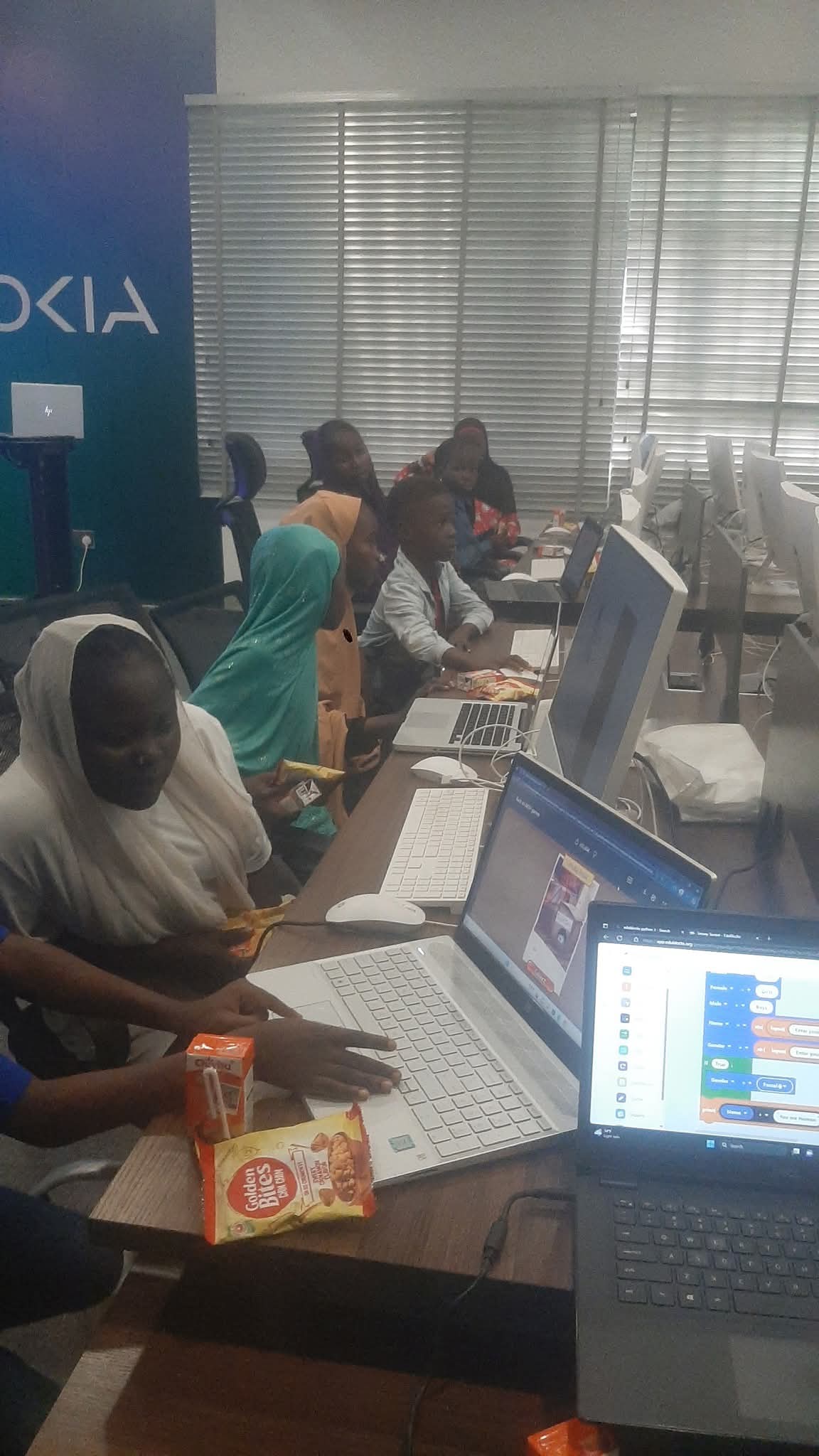
In our free elementary school for internally displaced children, we have observed that early exposure to age-appropriate digital learning:
Improves attention and engagement in the classroom
Builds confidence, especially among girls
Encourages curiosity and independent learning
Supports trauma-informed education through visual and interactive content
For children who have lost homes, routines, or loved ones, digital learning—when thoughtfully designed—can become a tool for healing and hope.
But What About Infrastructure Gaps?
A common argument against early digital literacy in low-resource settings is the lack of electricity, internet, and equipment. While these challenges are real, they should not become excuses for exclusion.
Innovation has shown us that digital learning does not have to depend on constant connectivity.
Effective approaches include:
Offline-first learning tools with preloaded educational content
Solar-powered systems that support devices and learning spaces
Shared digital hubs instead of one-device-per-child models
Teacher-led digital facilitation, even with minimal equipment
The question is no longer if digital literacy is possible in low-resource settings—but how intentionally we choose to implement it.
Why Early Matters More Than Late Intervention
Introducing digital literacy at the secondary or tertiary level is often too late to close the confidence and skills gap. Early childhood and primary years are critical periods for cognitive development, adaptability, and curiosity.
When children learn early that technology is:
A tool for learning, not intimidation
Something they can explore, not fear
A bridge to opportunity, not a reminder of inequality
they are better prepared to adapt as technology evolves.
Early exposure also helps prevent gender-based digital exclusion. In many low-resource settings, girls are less likely to be introduced to technology unless it is intentionally integrated into early education.
Teachers Are Central to Digital Inclusion
Technology alone does not transform education—teachers do.
In low-resource settings, educators play a crucial role in:
Guiding children’s first interactions with digital tools
Ensuring age-appropriate and safe usage
Integrating digital content into existing curricula
Creating inclusive learning environments
This is why investing in teacher training and support is just as important as investing in devices. When teachers are confident, children thrive.
Digital Literacy as a Pathway to Long-Term Impact
Early digital literacy lays the foundation for:
Improved learning outcomes
Increased retention and school attendance
Future digital and vocational skills
Greater participation in a digital economy
For displaced and vulnerable children, it can also reduce long-term dependency by equipping them with skills relevant to the modern world.
At Betharbel Foundation, initiatives like our Karatu Learning Hub are designed with this understanding—bridging foundational education with early digital exposure, even in challenging contexts.
A Call to Rethink What Is Possible
Low-resource settings should not mean low expectations.
Children in displacement camps, rural communities, and underserved areas are just as capable of learning, innovating, and leading—when given the right tools at the right time.
Early digital literacy is not about catching up with the world.
It is about ensuring no child is left behind as the world moves forward.
At Betharbel Foundation, we remain committed to expanding access to inclusive, offline-first digital learning for displaced children. Partnerships, innovation, and community support make this possible—and together, we can ensure that every child, regardless of circumstance, has a future that is connected, confident, and full of possibility.